August is one of those months that has quite a bit to offer. Sagittarius is still riding high enough in the evening to get some good integration time, Cygnus is climbing overhead with its own group of targets, and the Perseids are about to put on the best show they've had in a while. The catch is the back half of the month — a full moon on the 28th is going to wash out anything faint, so the first three weeks are really your window. Here's how I'd plan it.
The Big One: Perseid Meteor Shower 🔭
The Perseids run from mid-July through late August every year, but they peak on the night of August 12 into the morning of August 13, and this year the moon cooperates — there's no interfering moonlight, so under a genuinely dark sky you could see up to 100 meteors an hour. This isn't really a smart-scope target (you want your own eyes and a wide-open sky, not a narrow field of view), but it's worth building a night around. I may try to see if I can get some wide angle shots with the S30 Pro, but it may be a hit or miss type of process. If you can get out to a darker site for it, do it. If you're stuck in the backyard, you'll still catch the brighter fireballs.
Sagittarius Is Still the Main Event 🌌
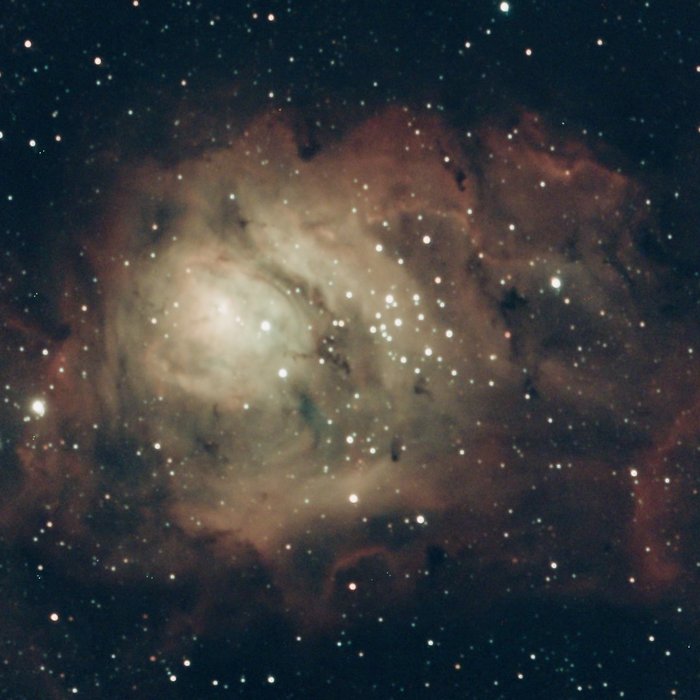
This is the same reason I keep coming back to this part of the sky every summer — the Lagoon Nebula (M8) and Trifid Nebula (M20) sit right next to each other near the spout of the Teapot, and they're bright enough to actually punch through a Bortle 7 backyard like mine. M8 is a genuinely big target, about three times the size of the full moon, split by a dark dust lane with a bright stellar nursery at its core. M20 right next to it is smaller but has that three-lobed structure and the red-blue contrast between the emission and reflection nebula that makes it a favorite for a reason.
If you want to push further, the Eagle Nebula (M16) and the Swan/Omega Nebula (M17) are close by too. M16 is home to the "Pillars of Creation" — it's fainter and a tougher target from the city, so budget more integration time than you would for M8 or M20.
Don't Sleep on What's Overhead
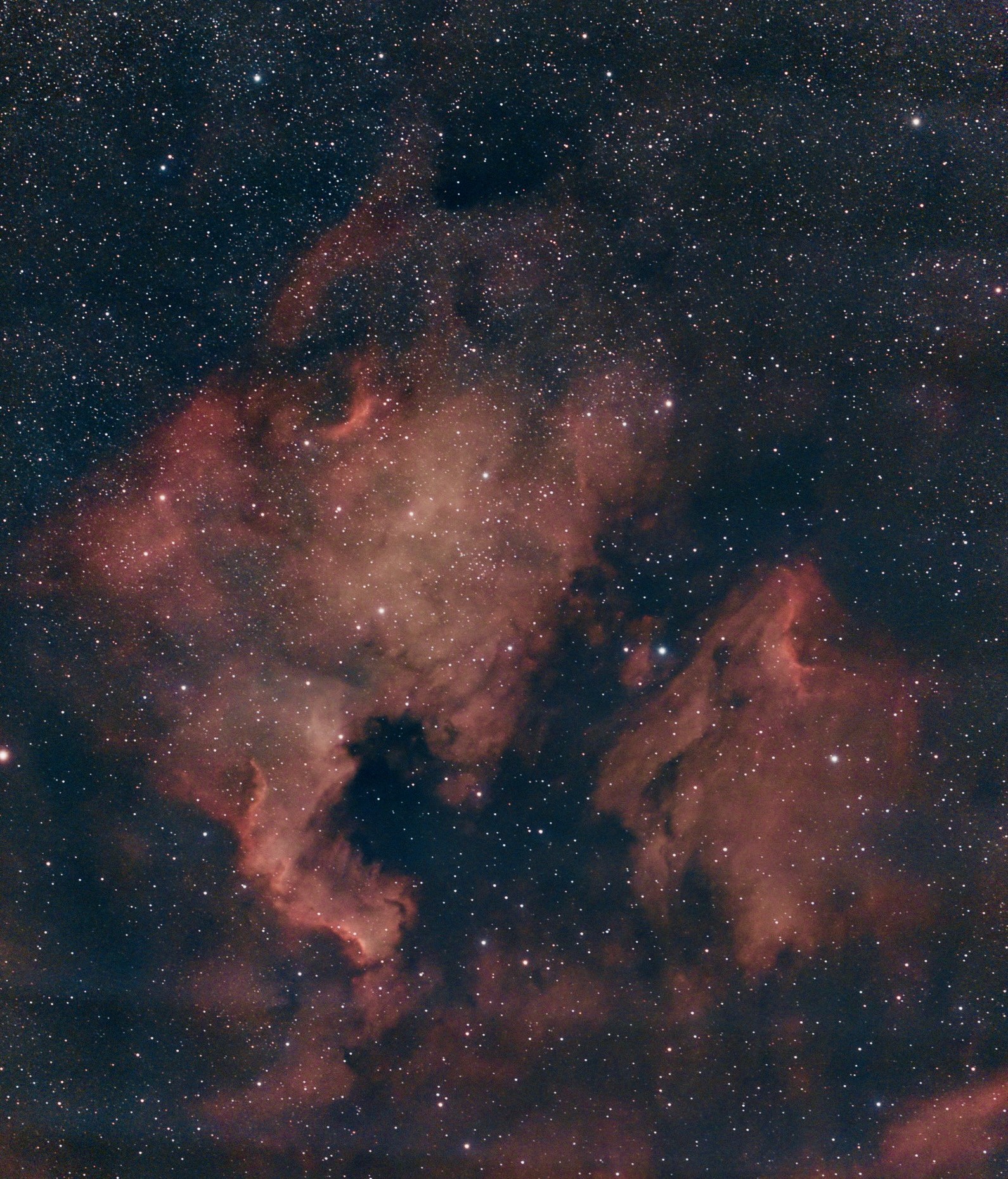
While Sagittarius is low in the south, Cygnus is climbing high overhead, and that region has its own strong lineup: the Veil Nebula (a supernova remnant) and the North America Nebula (NGC 7000) are both up there, along with the smaller, brighter Ring Nebula (M57) in Lyra and the Dumbbell Nebula (M27) in Vulpecula. The Ring and Dumbbell are compact planetary nebulae — bright enough to be solid backyard picks even under some sky glow. The Veil and North America Nebula are the opposite: faint, sprawling, and genuinely worth saving for a dark-sky trip rather than fighting for them from a Bortle 7 driveway. That's exactly the kind of target I'd bring out to Starfront for instead of trying from home.
Planets: Venus Steals the Evening, Saturn Rewards Patience 🔭
Venus hits its greatest eastern elongation on August 15 — 45.9 degrees from the sun — which makes this the best evening Venus viewing of the year. It'll be sitting higher above the western horizon after sunset than it has been.
Saturn is a different story. It's not really an evening target yet — it doesn't clear the horizon until a few hours after sunset and looks best in the hours before dawn. It's on its way toward an October 4 opposition, so it's brightening through August and the rings are well placed for imaging if you're willing to stay up (or get up early). Jupiter, on the other hand, basically sits August out — it's coming off a solar conjunction in late July and stays low in dawn twilight all month. Planets are extremely difficult to get with a smart telescope, but they're interesting to follow as they progress through the night sky.
The Wrinkle: Full Moon and a Partial Lunar Eclipse on the 28th
August 28 brings a full moon paired with a partial lunar eclipse — the moon passes through Earth's outer shadow with a noticeable darkening, and part of it dips into the darker umbral shadow. It's worth watching in its own right, but from an imaging standpoint, treat the last several days of the month as a wash for anything faint. Plan your Sagittarius and Cygnus sessions for the first three weeks, and save the 28th for the moon itself. I'm going to try to live stream the partial lunar eclipse if I can get everything set up correctly between now and then.
August 2026 Targets at a Glance
| Target | Type | Best Window | Why It's Worth It |
|---|---|---|---|
| Perseid Meteor Shower | Meteor shower (naked-eye) | Night of Aug 12 into early Aug 13 | No interfering moonlight this year — up to 100/hr under a dark sky |
| Lagoon Nebula (M8) & Trifid Nebula (M20) | Emission / reflection nebulae | Evenings, low south (Sagittarius) | Bright enough for a Bortle 7 backyard; a great wide-field pair |
| Eagle Nebula (M16) & Swan Nebula (M17) | Emission nebulae | Evenings, Sagittarius/Serpens | Home of the "Pillars of Creation" — fainter, budget more exposure time |
| Ring Nebula (M57) & Dumbbell Nebula (M27) | Planetary nebulae | High overhead after dark | Small but bright — solid backyard picks when Sagittarius is too low |
| Veil Nebula & North America Nebula | Supernova remnant / emission nebula | Late evening, high in Cygnus | Faint and sprawling — save for a genuinely dark-sky trip |
| Venus | Planet | Evening, western sky, peaks ~Aug 15 | Greatest elongation — the best evening Venus of the year |
| Saturn | Planet | Late night into pre-dawn | Rings well placed, brightening toward its October opposition |
| Full Moon + Partial Lunar Eclipse | Lunar event | Night of Aug 28 | Worth watching, but moonlight washes out faint targets that week |
"Sagittarius is still the main event, Cygnus is climbing to back it up, and the Perseids are the one night this month you don't even need a scope for."
Watch the Perseids
Aug 12–13, no moon interference, no scope required — just go outside.
Run Sagittarius
M8 and M20 are bright enough to fight through sky glow, and a dual-band filter helps a lot here.
Save It for the Veil
The faint stuff — the Veil Nebula, North America Nebula — that never looks right from home.
Targets I'm Shooting This Month 🔭
Here's where I'm actually pointing both scopes this month. The split comes down to sky darkness — Atlanta is a Bortle 6-8 backyard, so I lean on brighter targets and a dual-band filter, while the S30 Pro out at Starfront is sitting under genuine Bortle 1 skies, so it's the one I trust with the faint, sprawling stuff.
S50 · Atlanta (Bortle 6-8)
- M8 Lagoon + M20 Trifid — bright enough to punch through backyard sky glow, dual-band filter doing the heavy lifting
- M57 Ring Nebula + M27 Dumbbell — compact planetary nebulae, reliable backyard picks once Sagittarius gets low
- Passing on M16, M17, the Veil, and NGC 7000 this month — too faint to fight through the glow from home
- Perseids on the 12th-13th — no scope needed, but I'll try a few wide shots with the S50 if the clouds cooperate
S30 Pro · Texas (Bortle 1, Starfront)
- Veil Nebula + North America Nebula (NGC 7000) — faint and sprawling, exactly what Bortle 1 skies are for
- Eagle Nebula (M16) + Swan Nebula (M17) — the "Pillars of Creation" region, worth the longer integration a dark site allows
- Re-running M8/M20 for depth — same targets as Atlanta, but pushing exposure further since the sky isn't fighting me
- Racing the clock before the Aug 28 full moon and partial eclipse wash everything out
This is the plan going in — weather and actual clear-sky windows will have the final say, and I'll come back and adjust if any of this ends up way off.
Sources I Used to Plan This Month
I don't map out a month's targets purely off memory — I cross-check against a few astronomy channels and calendars before I commit to a plan. For August, the main one was CosmicCaptures' video "The 5 Best Astrophotography Targets for August 2026", which is where I confirmed the Sagittarius picks and the Perseids timing before building this out. I look at this YouTube channel regularly for what to image next.